
Herzig Eye Institute in Cataract Surgery, Featured Blog, Refractive Surgery on November 10, 2026
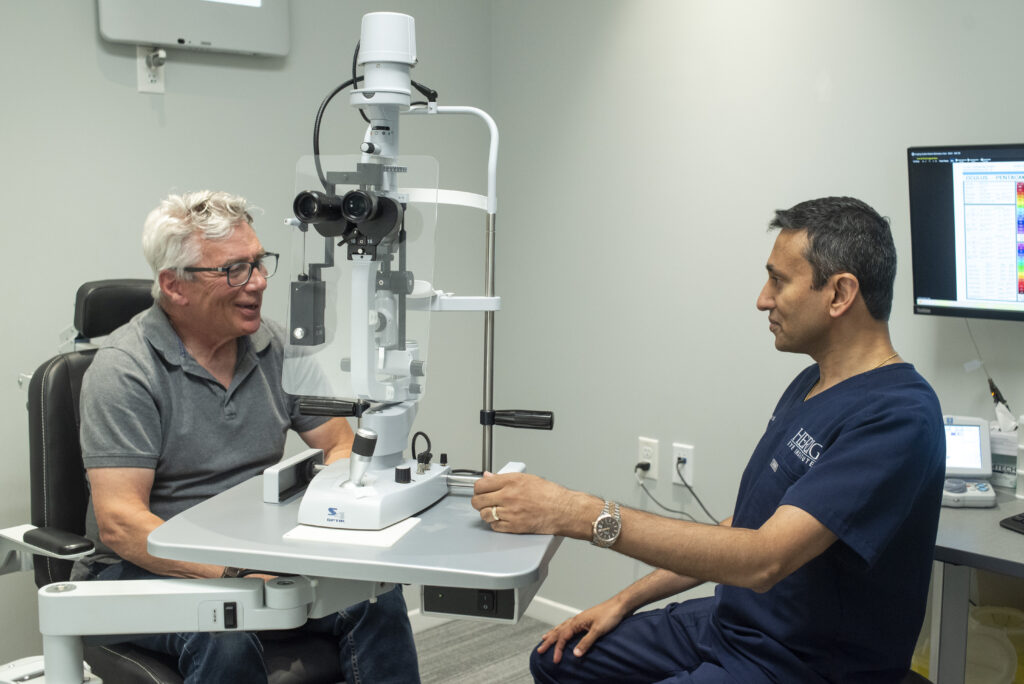
One of the most common questions patients have when considering cataract surgery is whether they will still need glasses afterwards.
The answer depends on several factors, including the type of cataract surgery you choose, the use of advanced diagnostic technology for performing pre-operative measurements, the intraocular lens (IOL) that’s used in the procedure, your individual prescription, and how you want to use your vision day to day.
For some patients, wearing glasses occasionally after cataract surgery isn’t a concern. Others hope to reduce their dependence on glasses as much as possible. Understanding your options before surgery can help you and your surgeon plan for the vision that best fits your lifestyle and goals.
Why Might You Need Glasses After Cataract Surgery?
Cataract surgery is the most common surgery performed in Canada. The procedure is very safe and involves removing the eye’s cloudy natural lens (the cataract) and replacing it with a clear artificial lens called an intraocular lens, or IOL.
The type of IOL selected plays an important role in how you see after surgery. Some lenses are primarily designed to provide clear vision at one focal point, usually distance. In these cases, glasses will still be needed for intermediate or near tasks, such as working on a computer or reading. Other IOLs are designed to provide a broader range of vision and reduce the need for glasses at more distances.
Traditional vs. Refractive Cataract Surgery
Another important consideration is the type of cataract surgery you choose.
The primary goal of traditional cataract surgery is to remove the cloudy cataract and restore clarity of vision. Some patients are comfortable continuing to use glasses after surgery.
Refractive cataract surgery goes a step further by combining cataract removal with technologies intended to reduce dependence on glasses. At Herzig Eye Institute, this can include specialized IOLs, laser-assisted cataract surgery, and advanced diagnostic testing to help determine the appropriate lens power.
The goal of refractive cataract surgery goes beyond simply removing the cataract. It involves considering what you want your vision to look like afterwards.
How Does Your Lens Choice Affect Whether You’ll Need Glasses?
There isn’t one “best” intraocular lens for every patient.
Different IOLs are designed to meet different visual needs. Your surgeon will consider factors such as your eye anatomy, lifestyle, and vision goals when recommending a lens.
Here’s a simple way to understand some of the options:
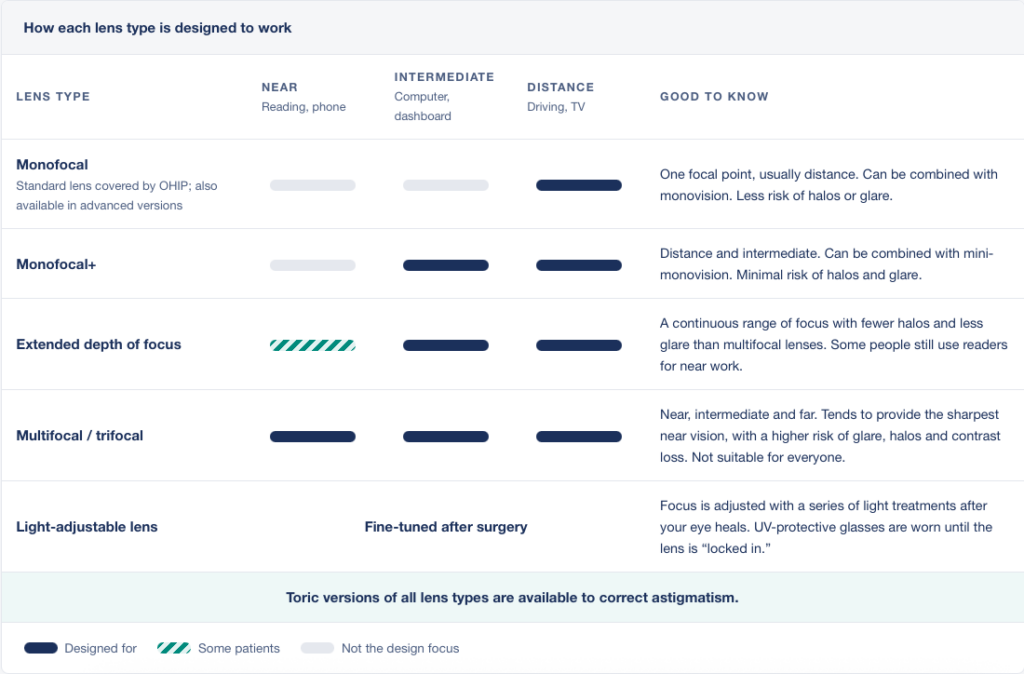
The important takeaway isn’t that one lens is better than another. It’s that your lens should be selected based on your eye health and how you want to use your vision.
Think About How You Want To Use Your Vision Everyday
Before your cataract consultation, it can be helpful to think about the activities that matter most to you.
For example:
- Do you drive frequently, especially at night?
- Do you spend a lot of time reading?
- Are you regularly working on a computer?
- Do you enjoy sports or outdoor activities?
- How important is reducing your dependence on glasses?
- Would you be comfortable using reading glasses for certain tasks?
These conversations matter because two patients with similar cataracts may have very different priorities. These details provide helpful context for your surgeon beyond what’s shown in your prescription glasses.
What Happens During A Cataract Consultation?
Your cataract consultation is where these decisions begin.
At Herzig Eye Institute, you will undergo diagnostic testing and a lifestyle assessment followed by a meeting with a highly experienced cataract and refractive surgeon to discuss your cataract surgery options and your visual goals.
Instead of arriving with a particular lens already chosen, it can be more useful to arrive knowing what you want from your vision.
For example:
“I’d really like to drive and watch television without glasses.”
or:
“Being able to read without reaching for my glasses is important to me.”
Those goals give your surgeon useful context when considering which options may be appropriate.
Frequently Asked Questions:
Can cataract surgery correct astigmatism?
Yes. Astigmatism can be addressed as part of refractive cataract surgery. Toric IOLs are among the options available when astigmatism correction is required.
Can I still have cataract surgery if I’ve previously LASIK, PRK or SMILE?
Yes. You can still have cataract surgery if you’ve previously had laser vision correction such as LASIK, PRK or SMILE. During your consultation, your surgeon will assess your eyes and discuss the IOL options that may be best suited to your vision and individual needs.
What is the Light Adjustable Lens?
The Light Adjustable Lens™ is an IOL that allows the lens power to be adjusted after cataract surgery using controlled light treatments. This allows the prescription to be fine-tuned after the procedure to optimize your vision.
Exploring Your Cataract Surgery Options
Your cataract consultation is an opportunity to learn more about the options available and discuss what matters most to you when it comes to your vision.
At Herzig Eye Institute, a surgeon-led consultation can help you understand your options and determine which approach may be appropriate for your eyes and visual needs.





 +1 (647) 490-6509
 416.929.0232